Why Belle Fourche Makes Sense for Rental Property Investment
Belle Fourche does not generate the same buzz as Rapid City or Spearfish in Black Hills investment conversations. For investors who know what to look for, that relative quiet is an advantage rather than a warning sign.
Belle Fourche is the county seat of Butte County and the commercial anchor of the northwestern Black Hills region. Its economy runs on agriculture, healthcare, retail services, and local government, stable employment sectors that produce reliable, long-term tenants rather than transient ones. The city sits at the geographic center of the nation and serves a trade area that extends well into the surrounding ranch country of western South Dakota and eastern Wyoming.
Rental demand here is consistent and practical. Tenants in Belle Fourche are workers, families, and residents who live and earn locally not seasonal employees or short-term visitors. That profile supports steady occupancy without the management intensity that tourism-dependent markets require. And because Belle Fourche has not attracted the investor attention of larger Black Hills communities, entry price points remain more accessible while fundamentals remain sound.
For investors seeking cash-flowing residential multifamily without paying a premium for a more prominent address, Belle Fourche delivers the basics that matter most, stable demand, affordable acquisition cost, and a manageable operating environment.
The Property: Four Units, Capital Improvements Done, Tenants in Place
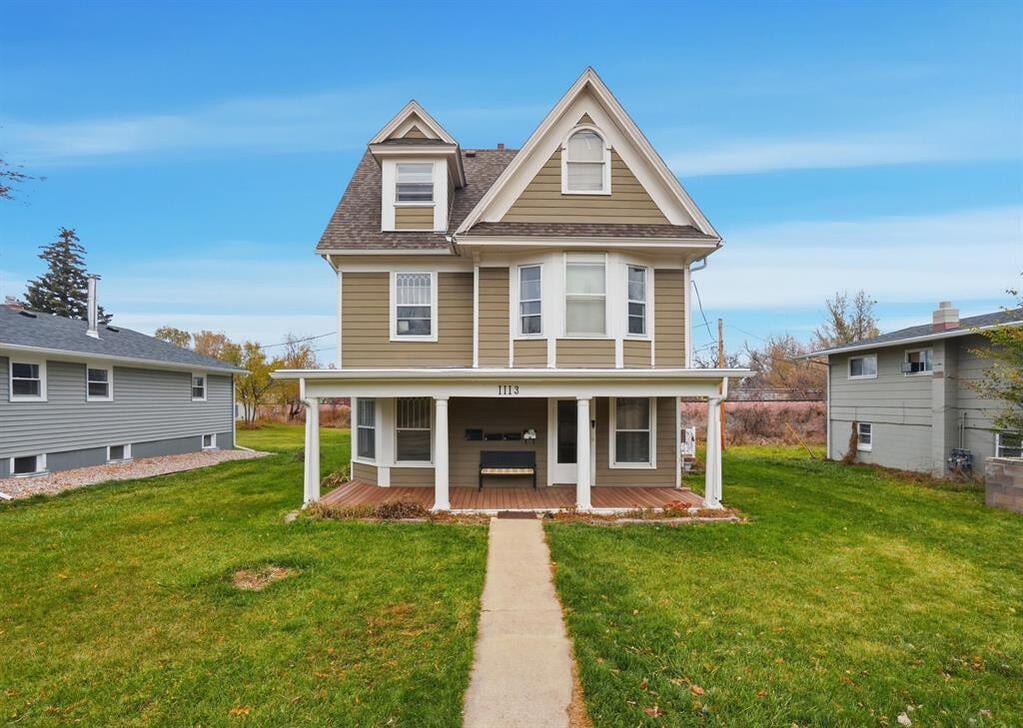
1113 Kingsbury Street is a 2,097 square foot, four-unit multifamily building with a history that goes back to 1896 and an ownership record that treated it as an asset worth maintaining. The result is a building that offers the character of historic construction without the deferred maintenance that typically accompanies it.
The unit mix is one of this property's clearest strengths. One three-bedroom unit, one two-bedroom unit, and two one-bedroom units; four different price points serving four different tenant types under one roof. A family needing three bedrooms, a couple in the two-bedroom, and single occupants in each one-bedroom. That diversity is not accidental. It insulates the property against vacancy because the tenant pool for each unit type is distinct. Losing one tenant does not mean losing your entire market.
The main floor three-bedroom unit includes a private Trex deck and is being sold partially furnished a detail that matters for an investor who wants the unit ready to rent immediately without additional outlay. The second floor houses the two one-bedroom units, each with updated heating units already installed. The upper unit adds a two-bedroom configuration with a breakfast nook that gives it a distinctive character within the building.
A covered Trex deck at the community entrance adds a shared amenity that improves tenant experience without significant maintenance burden. Off-street parking is available for tenants, a practical detail that matters in a rental market where parking is part of the value proposition.
The Capital Improvements Case: Why Turn-Key Matters
The phrase turn-key gets used loosely in real estate. At 1113 Kingsbury, it applies specifically.
The major capital expenditure categories that keep rental property investors up at night (roof, windows, siding, exterior) have been addressed. A new roof eliminates the single largest deferred maintenance risk in any multifamily acquisition. New windows reduce energy costs and eliminate a recurring tenant complaint. New siding and exterior paint deliver curb appeal and weather protection simultaneously. Updated heating units on the second floor mean the mechanical systems that matter most to tenant comfort and retention have been refreshed.
These are not cosmetic improvements. They are the categories that define whether a multifamily property generates cash flow or consumes it. When a new owner does not have to budget for a roof replacement in year two or negotiate with tenants over a failing heating system in January, the investment performs closer to the projection. That predictability is the core argument for a property where the heavy lifting has already been done.
The two-car detached garage adds a layer of income optionality that does not exist in the core four-unit analysis. Garage rental in smaller South Dakota communities is a straightforward transaction, a fixed monthly rate for covered parking or storage that drops directly to the bottom line with minimal management.
Running the Numbers: What a 7% Cap Rate Means Here
An estimated 7% cap rate on a stabilized residential multifamily in a stable small market is a meaningful data point. Here is what it means in practice.
Cap rate is net operating income divided by purchase price. At a 7% cap rate on this property, the asset generates approximately $29,400 in net operating income annually before debt service. That figure already accounts for operating expenses like property taxes, insurance, maintenance reserves, and vacancy allowance which are kept lean in part because tenants are responsible for their own electric, gas, and internet. The owner's utility exposure is limited to water, sewer, and garbage, which are included in the main floor unit's rent structure.
Tenants paying their own utilities is not a minor detail. In a four-unit building, utility costs paid by the owner can meaningfully compress net operating income. When tenants carry those expenses directly, the owner's operating cost structure tightens and cash flow becomes more predictable regardless of seasonal usage patterns.
For an investor financing this acquisition, cash-on-cash return will depend on down payment size, interest rate, and loan terms. The Valente Realty team can connect interested buyers with lenders experienced in multifamily transactions in this market, the financing product for a four-unit residential property differs from single-family, and working with a lender who understands that distinction saves time and frustration.
Who This Property Is Right For
A four-unit multifamily in Belle Fourche at this price point attracts a specific type of investor, and being direct about that matters.
This is not a value-add play requiring renovation capital and a heavy management hand. The improvements are done. The units are occupied. The investor who wins here is one who wants stabilized cash flow from day one not someone looking to force appreciation through a turnaround. If your strategy is buy-renovate-refinance, this is not your property. If your strategy is acquire-hold-collect, it deserves a serious look.
It also suits the investor entering multifamily for the first time. Four units is the upper threshold of residential financing, you can still use conventional residential loan products rather than commercial financing, which simplifies the acquisition and typically delivers better terms. A first-time multifamily buyer gets the benefit of a multi-unit income stream with the financing structure of a residential purchase.
And it suits the out-of-state investor who wants Black Hills market exposure at a price point that does not require a Rapid City or Spearfish premium. Belle Fourche's fundamentals are sound, the property management environment is manageable, and the asset is positioned to perform without requiring hands-on intensity.
Schedule a Showing Before This One Closes
Stabilized multifamily with completed capital improvements and a documented cap rate does not sit on the market indefinitely. Investors who are prepared, financing identified, strategy clear, and an understanding of what this asset can actually produce move when the right property appears.
Reach out to Madison Shipman at Valente Realty to schedule a showing of 1113 Kingsbury Street and request the full income and expense documentation. We will walk you through the numbers, answer questions about the Belle Fourche rental market, and give you an honest picture of what ownership here looks like from month one forward.